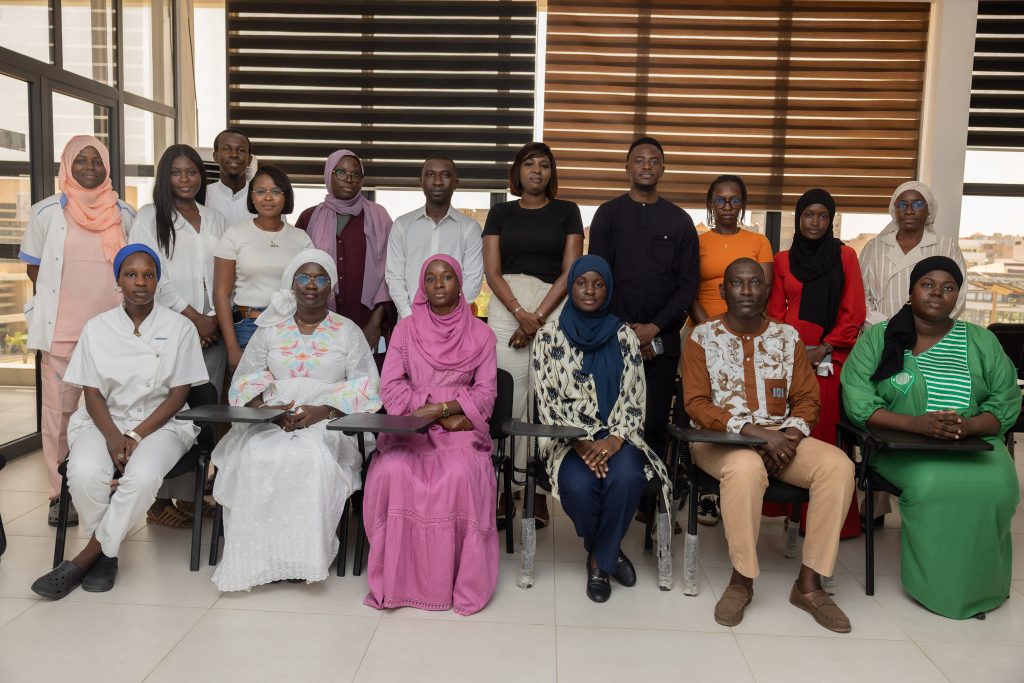
From 11 to 13 August 2026, UTI-Diag, with support from Institut Pasteur de Dakar, delivered training at Centre Hospitalier National Dalal Jamm on the use and usability assessment of three diagnostic tools. The session brought together 14 trainees from several hospital departments, along with six facilitators and support team members.
The training marked an important step in preparing the Dalal Jamm site for the project’s upcoming activities. It aimed to strengthen the teams’ practical skills, gather their feedback and support the gradual adoption of the tools under real healthcare conditions.
Preparing the site for usability assessment
Usability assessment examines how healthcare professionals and participants understand, handle and integrate a tool into their working environment. Beyond technical performance, it helps identify difficulties, areas requiring clarification and adaptations needed before wider implementation.
At Dalal Jamm, the training brought together professionals from gynaecology, urology, nephrology, infectious diseases and the laboratory. This multidisciplinary participation helped test the tools against different care pathways and identify potential entry points for future recruitment.
Three complementary tools at the heart of the training
Participants worked with three solutions developed or evaluated within UTI-Diag:
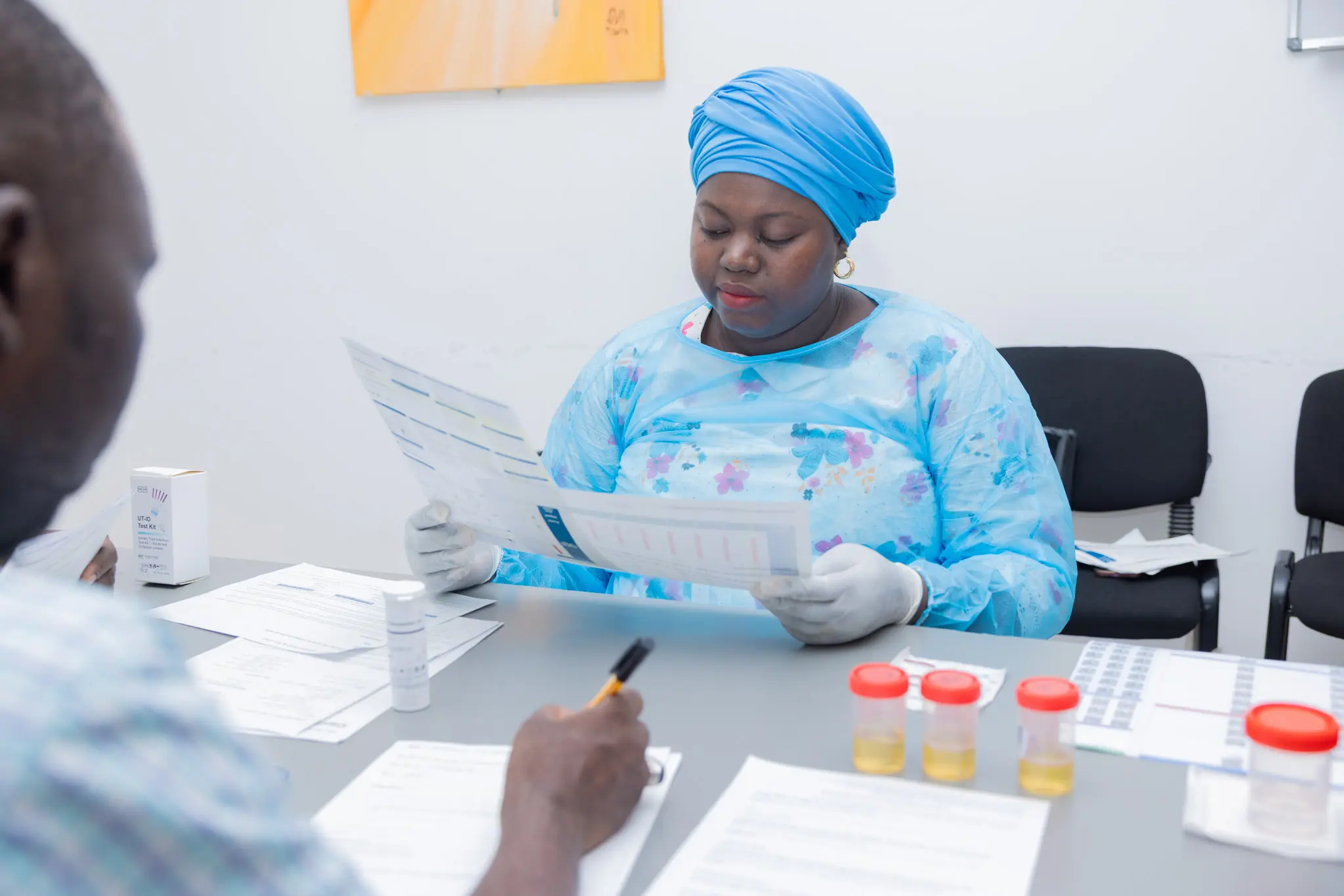
- UTI LFT, a visually read lateral flow test intended for the initial screening of urinary tract infections.
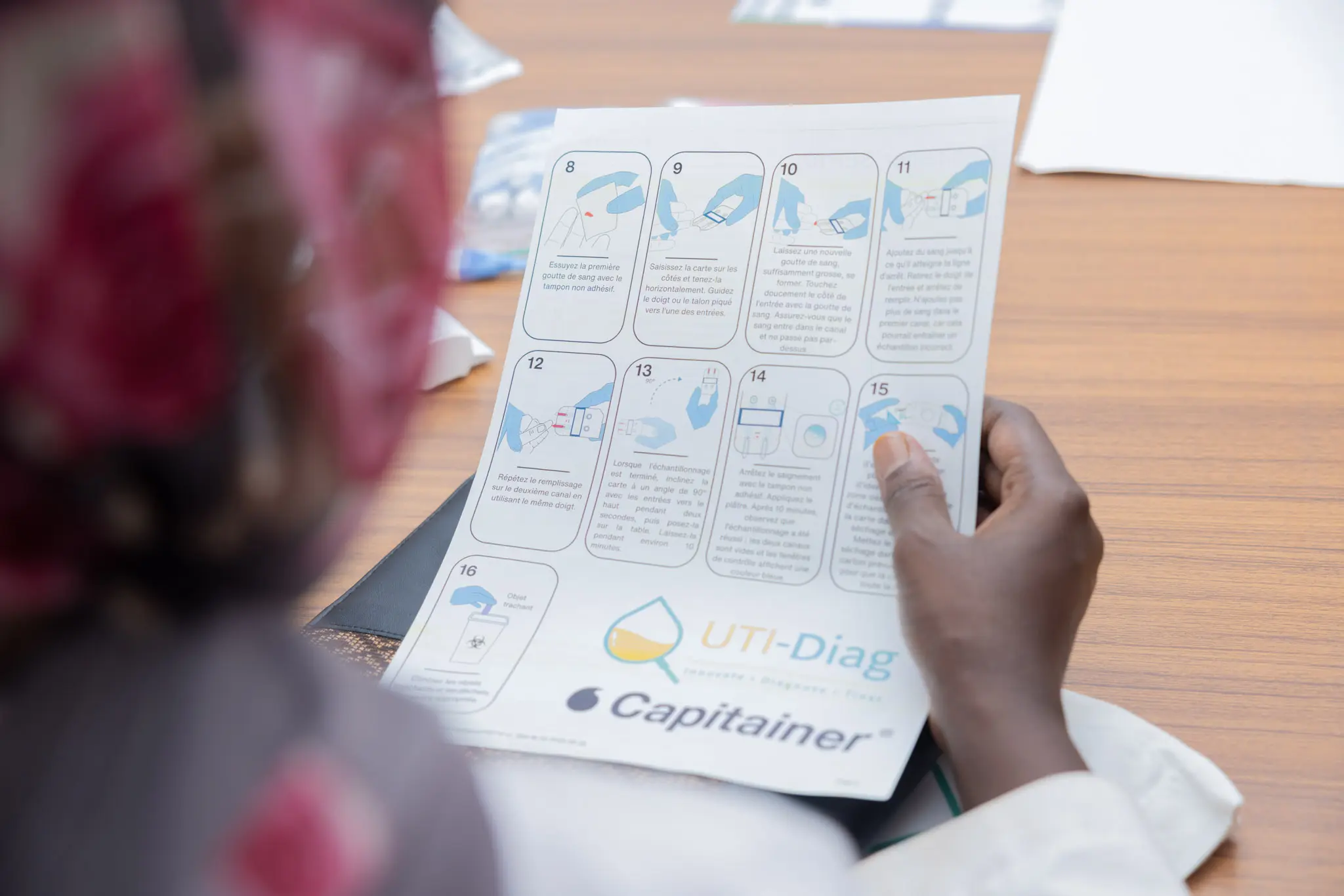
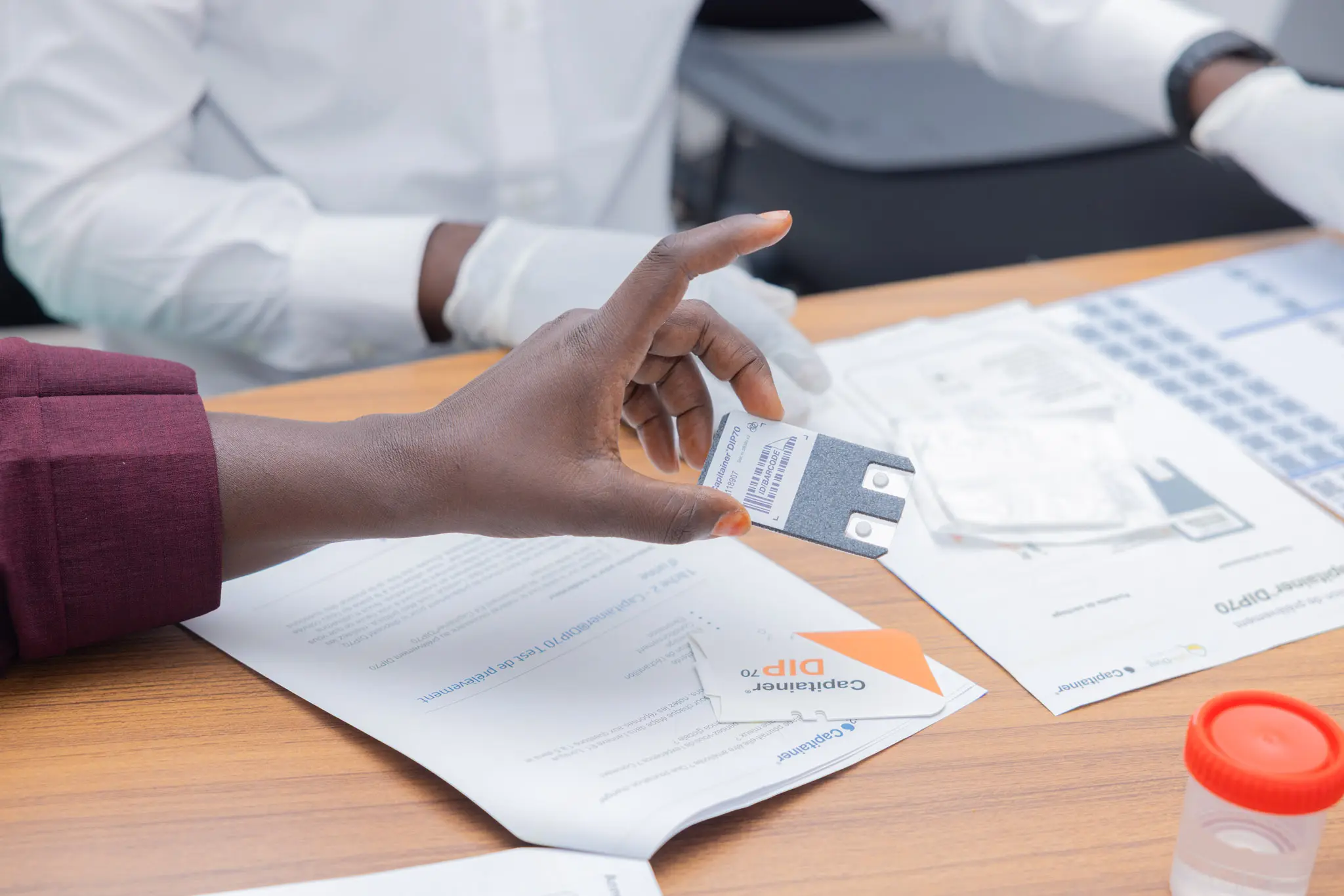
- Capitainer, volumetric cards for dried urine and dried blood or plasma samples that can be used without a cold chain.
- Aviro Pocket Clinic, a multilingual digital platform designed to support the participant journey and data collection.
The programme combined theoretical presentations, demonstrations, practical exercises and simulated scenarios. This approach enabled the teams to handle the tools, understand the roles of facilitator and observer, and provide feedback based on their experience.
Three days of learning and hands-on practice
The first day introduced the project, explained how the tools work and demonstrated the main tasks. The second day focused on practical workshops, rotations between stations and paired simulations.
The final day consolidated learning through simulated scenarios, a group debrief and discussion of the next steps. Participants took turns acting as healthcare professional, participant, facilitator and observer to better understand the requirements of each role.
Training materials provided to participants
As part of the training logistics, participants received kits containing tote bags, pens and notebooks. These items complemented the training materials and supported note-taking during presentations, workshops and debriefing sessions.
Feedback to inform the next steps
The closing discussions reflected an overall positive assessment of the training and the tools’ ease of use. They also highlighted several practical areas for improvement.
- Shorten certain stages of the digital pathway and group related questions.
- Use simpler language centred on the patient experience, while limiting medical terms that may be difficult to translate or explain.
- Strengthen visual guidance to help users recognise a sample collected correctly with Capitainer cards.
- Clarify inclusion criteria, team responsibilities and the recruitment pathway within the hospital.
This feedback demonstrates the value of involving future users in usability assessment. It will help the project teams refine the materials, procedures and organisation before the next phases.
Strengthening collaboration
The training strengthened collaboration between Institut Pasteur de Dakar and Centre Hospitalier National Dalal Jamm. The participants’ engagement, the range of departments represented and the quality of the discussions provide a strong basis for building the site’s autonomy.
The next steps will focus on consolidating the observations, finalising priority adaptations, clarifying the recruitment pathway and organising additional simulations before the pilot phase begins.
Follow the next stages of the project and partner activities on the UTI-Diag website.